Can my radiators stay?
The room-by-room emitter check at the proposed water temperature, including which radiators may need to change.

FENNOR / HEAT-PUMP FAQ
Will the radiators stay warm enough? Will there be enough hot water? What happens to the bills? Fennor gives you clear answers tied to your home, not a one-size-fits-all sales pitch.
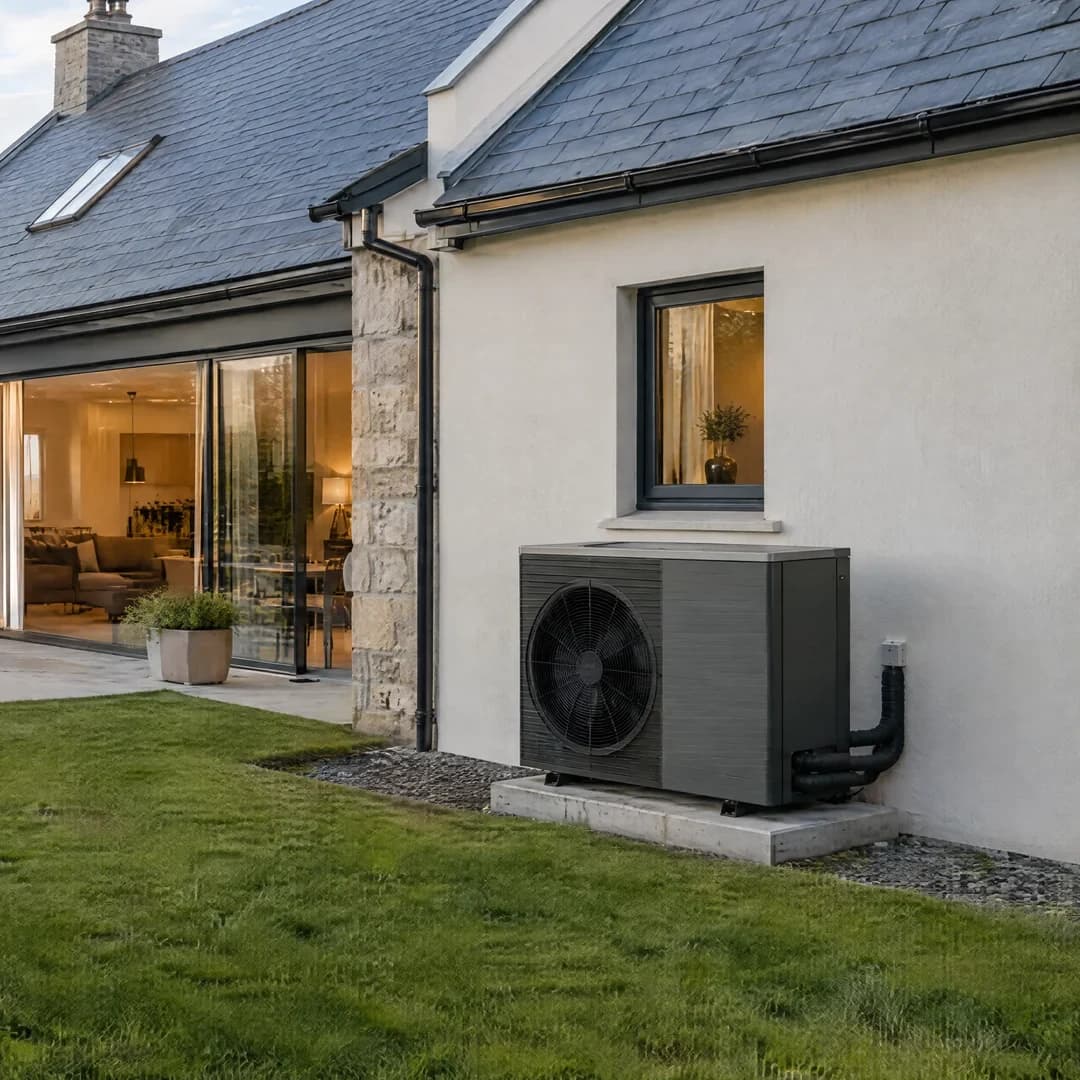
MAKE SENSE OF YOUR RUNNING COSTS
Fennor explains a running-cost estimate through the home’s assessed heat demand, assumed performance and applicable tariff. Try the relationship below, then bring your bills and questions to the assessment conversation; this editable example is not your home’s forecast.
EDITABLE EXAMPLE / NOT A FORECAST
WITH THESE ASSUMPTIONS
€1,200illustrative annual energy cost
The example holds heat demand constant. Changing the seasonal factor changes the electricity needed—not the amount of heat delivered.
Heat demand is useful heat delivered, not a fuel-bill reading. Seasonal performance is an assumption, not a guaranteed rating or a single laboratory COP. Use consistent system boundaries for heat, electricity and auxiliary consumption.
This arithmetic excludes standing charges, maintenance, installation, finance, solar contribution and time-of-use scheduling. An assumed blended tariff should use your actual applicable VAT basis. Fennor explains the heat-demand, performance and additional-cost assumptions behind your proposal, using the relevant assessment and your applicable tariff rather than this generic example.
YOUR QUESTIONS / A CLEARER CONVERSATION
Your Fennor proposal connects the technical findings to everyday questions: what changes in each room, how you will use the heating and what the price covers. Unknowns are made clear before you accept the work.
Ask Fennor about your heating plansThe room-by-room emitter check at the proposed water temperature, including which radiators may need to change.
The assessed heat demand, assumed seasonal performance, your tariff and the comparison system—with limitations explained.
The demonstration and handover scope, including normal heating, hot water and the contact for fault or service queries.
The written scope, budget, exclusions, installation responsibilities, warranty conditions and named aftercare contact.
YOUR PROJECT WITH FENNOR
We explain the choices, the work involved and what happens next, so you can decide with a clearer picture.
The design may recommend a different radiator, a new cylinder or pipework changes. We explain why each item is needed, what it affects in your home and what it costs, using the heating calculations behind the recommendation.
We agree a practical controls demonstration as part of the project. It covers normal schedules, weather compensation and useful settings for the installed system, which is often designed for steady operation rather than repeated large temperature changes.
We explain the warranty, maintenance requirements and aftercare arrangement before you decide. At handover, the agreed records and support contacts come together so a fault or a simple operating question does not leave you searching for the right person.
A SIMPLE START
MORE WAYS WE CAN HELP
SUPPORT FOR THE WORK YOU HAVE IN MIND
These are the relevant funding options to discuss with Fennor alongside your project. We explain the full price, the support that may apply and the steps before you commit.
Reviewed · Guidance, not an eligibility decision.
Grant support
Up to €14,500
The eligible house maximum includes the system, necessary heating upgrades and qualifying scrappage. It is not a flat payment for every installation.
Grant support
Up to €6,500
Eligible replacement systems have a lower ceiling: up to €6,500 for a house or €4,500 for an apartment.
USEFUL ANSWERS
Plain language. No pressure to have it all figured out.
Not necessarily. A lower-temperature system can keep rooms comfortable with suitable radiators and longer operating periods. We explain what that means for the proposed system; room comfort matters more than a radiator feeling very hot.
We include your showers, baths and busy periods in the brief. The designer uses those needs to size the cylinder and plan recovery and controls, including how hot water and space heating share the system.
Some habits may change. We include a demonstration of the installed controls and normal schedules in the agreed handover. Follow that guidance rather than making large setbacks or changing technical settings yourself.
We take you through the assumptions for heat demand, water temperature, seasonal performance, tariff and use. The calculator illustrates those relationships; it is not a forecast for your property or a promised saving.
LET’S TAKE THE NEXT STEP
Cold rooms, rising bills or a heating system you want to change? Tell us what matters most. We explain the assessment and options for your home—you do not need to choose the equipment or a grant scheme first.
Based in Slane, serving Meath, Louth and Dublin. Tell us about a project further afield and we will confirm whether we can help.
089 403 2737 ↗info@fennor.ieWe will confirm the next step, availability and any assessment cost with you before a visit is booked.