How much panel capacity?
The panel array’s nominal capacity under standard test conditions. Not a promise of its instantaneous or annual output.

FENNOR / SOLAR CALCULATOR
Try a few panel counts and see how electricity use changes the numbers. Then bring the result to Fennor for a closer look at your roof and routine. These are planning examples, not a design or quotation.
LEARN THE LANGUAGE OF THE NUMBERS
The panel array’s nominal capacity under standard test conditions. Not a promise of its instantaneous or annual output.
The rate of electricity generation or use at a moment. Inverter and backup power limits are important here.
The units on your electricity bill. Battery capacity and annual generation are also expressed in kWh.
Move the controls. See why a battery’s kWh capacity and an inverter’s kW power rating describe different things.
1.0 kW × 2 hours
Energy used over the selected timeConstant-power arithmetic only. Real loads vary. This does not predict solar generation or usable battery runtime.
USE THE CALCULATORS BELOW
Multiply the number of panels by their rated watts to get nominal array capacity. The graphic is illustrative; a measured roof layout determines what fits.
If you already have an annual generation estimate, try it below. Otherwise, Fennor prepares a roof-specific estimate following assessment and explains its weather, shading and system-loss assumptions. Panel capacity alone cannot tell you annual output.
Try lower and higher direct self-use in the value calculator. Replace the example import and export rates with your actual tariff, on a consistent VAT basis.
SYSTEM SIZE EXPLORER
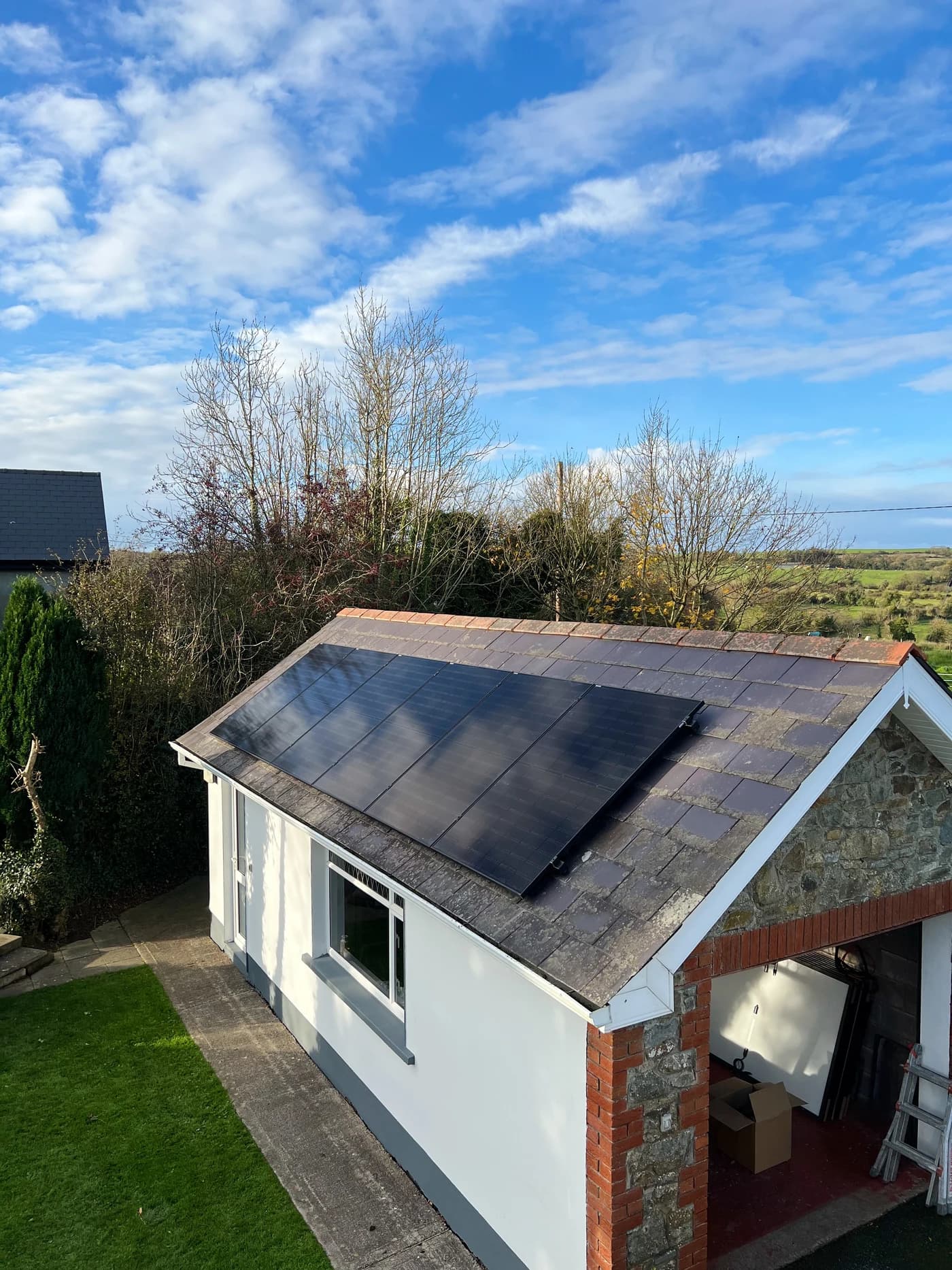
Explore how panel numbers affect system size, then talk to Fennor about a layout for your roof. The illustration does not confirm what fits.
SCHEMATIC PANEL COUNT / NOT A ROOF DESIGN12 panels × 440 W ÷ 1,000. Change the panel rating to explore the size. We will explain the equipment proposed for your home separately; this example is not a product specification.
Send an online enquiry ↗Email these system choices ↗AN EDITABLE ILLUSTRATION
How much solar electricity could you use while it is being generated? Move the slider to see how that changes the balance between electricity you do not need to buy and payments for exported power. Bring your result to us and we will explain what a home-specific estimate needs.
Used kWh × import rate + exported kWh × export rate.
No battery, grant or equipment cost is included. This is not net savings, annual yield, bill reduction or payback. It excludes standing charges, maintenance, degradation and tariff changes. All directly used generation is assumed to replace imports at the entered rate.
YOUR PROJECT WITH FENNOR
We explain the choices, the work involved and what happens next, so you can decide with a clearer picture.
kWp is nominal panel capacity under test conditions, not annual generation. Yearly kWh depend on location, orientation, tilt, shading and losses. We explain the site assessment needed to move from the example to a system for your property.
Power used at home can avoid imports at your unit rate; export earns a separate rate. Try your actual tariffs on a consistent VAT basis. The illustration excludes export caps, curtailment and standing charges, and does not count battery savings twice.
A proper appraisal includes installed cost, eligible support, maintenance, degradation, future tariffs and the time value of money. The tool does not promise a payback period. We explain the assumptions and next information needed for your own proposal.
A SIMPLE START
MORE WAYS WE CAN HELP
SUPPORT FOR THE WORK YOU HAVE IN MIND
These are the relevant funding options to discuss with Fennor alongside your project. We explain the full price, the support that may apply and the steps before you commit.
Reviewed · Guidance, not an eligibility decision.
Grant support
Up to €1,800
Support is based on the installed panel capacity. With a separately eligible €600 battery grant, the combined standard maximum is €2,400.
Grant support
€600
Flat-rate support for an eligible battery of at least 5 kWh. A larger battery does not increase this grant.
Grant support
Up to €9,000
An eligibility-based route: up to €8,400 solar PV plus €600 for an eligible battery. It replaces—not adds to—the standard PV rate.
USEFUL ANSWERS
Plain language. No pressure to have it all figured out.
No. It illustrates the count. We explain the assessment required for roof dimensions, structure, clearances and shading before a layout can be established.
No. The defaults explain the arithmetic. We use your demand, tariff and a site-specific generation estimate for a meaningful property-specific discussion.
LET’S TAKE THE NEXT STEP
Based in Slane, serving Meath, Louth and Dublin. Tell us about a project further afield and we will confirm whether we can help.
089 403 2737 ↗info@fennor.ieWe will confirm the next step, availability and any assessment cost with you before a visit is booked.