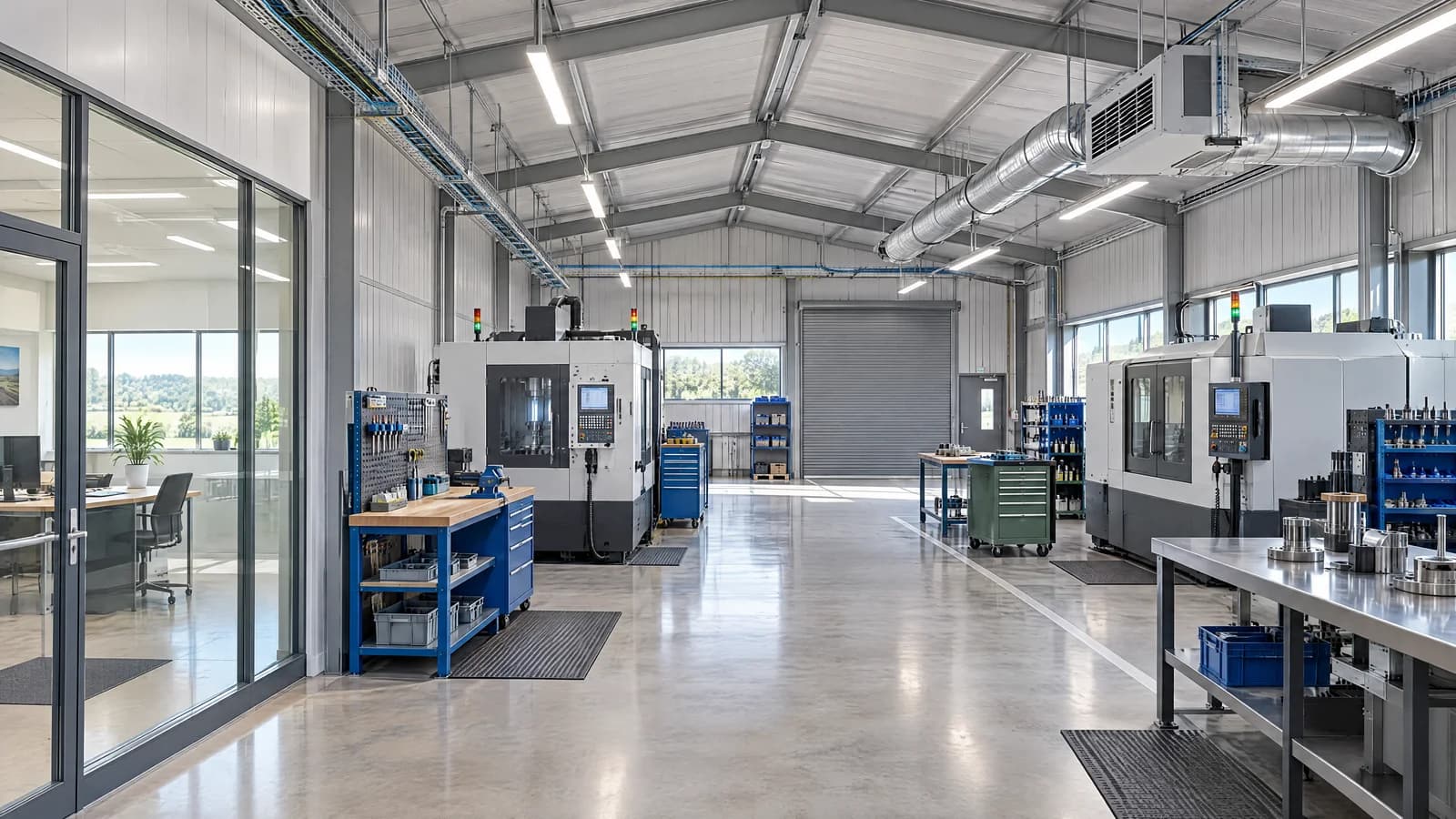
The roof & the building
We establish the roof condition, structure, materials and safe access before proposing a layout. If you lease the premises, we identify the landlord and insurer permissions needed so the project has a sound starting point.

COMMERCIAL SOLAR / FENNOR
Put daylight to work. Commercial solar PV planned around your premises, your operating hours and the electricity you actually use.
Let’s explore your site ↗Watch the commercial film ↓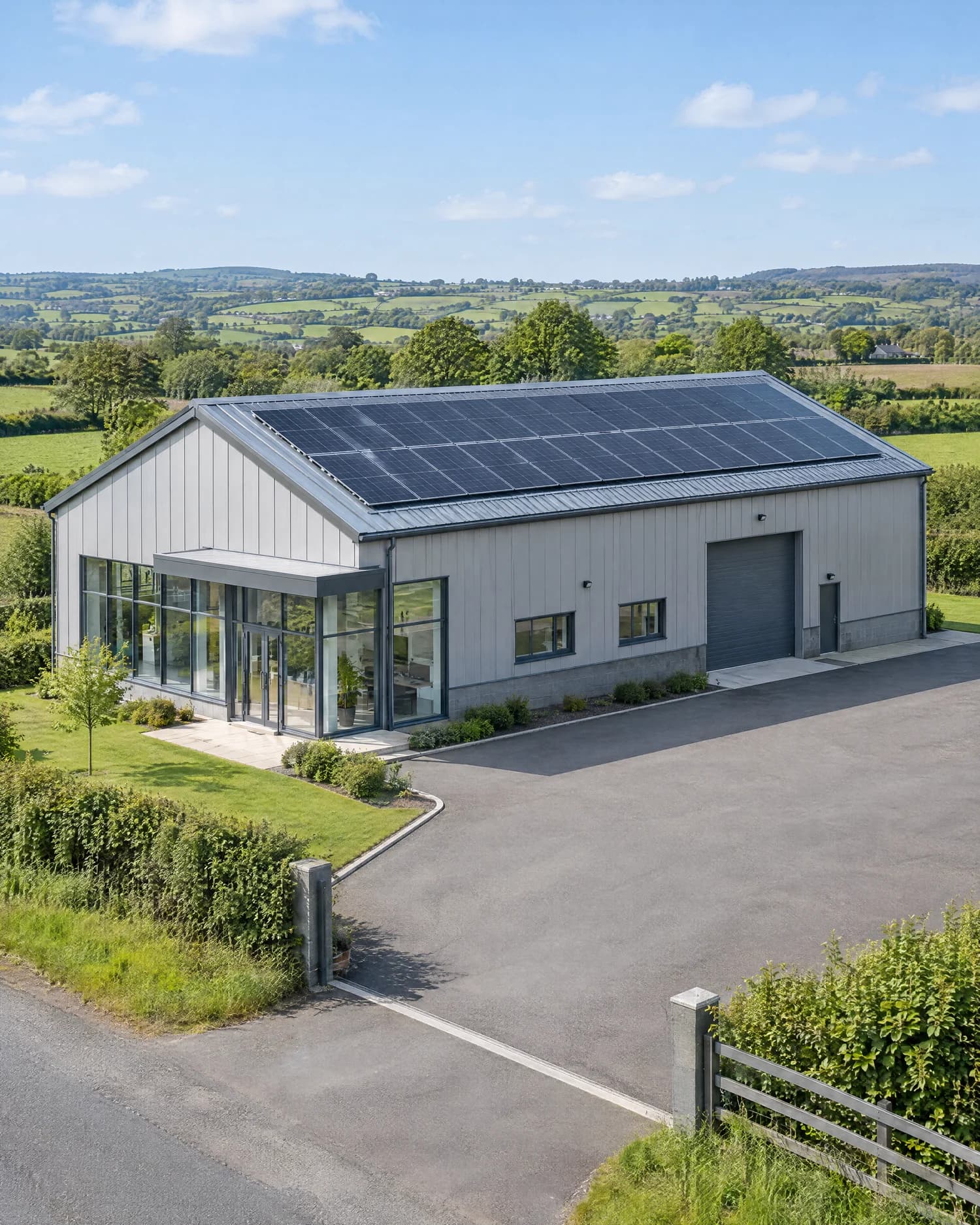 ON-SITE GENERATION / A DIFFERENT PERSPECTIVENEW APPLICATION WINDOWMore support.
Machinery. Lighting. Electric heating and ventilation. See how on-site solar can contribute to the electricity your business uses during daylight hours.
Explore your operating pattern ↓Concept film · An illustrative energy journey, not a completed customer project or a savings calculation. Silent, with on-screen text. Press play when you’re ready.
Explore the potential at your site ↗The consumption range comes from Procure.ie’s customer-data benchmark ↗. Its sample is not an official nationwide business average; sector, operating hours and equipment can change demand substantially. For your proposal, we use your own electricity history to understand the pattern at your premises.
Grant terms rechecked on 9 October 2026 against SEAI’s current commercial solar guidance ↗. We explain the application steps and current terms with you before you proceed. Batteries and other extras are outside the PV grant calculation. Your offer has its own completion conditions.
Explore the system-size grant allowance ↓Roof space tells one part of the story.
When you use electricity tells the other.
Conceptual shapes on a relative scale. Not seasonal generation, interval-meter readings or a savings calculation.
Weekday demand can overlap with daylight. We account for quiet Sundays and holiday closures as well, so the model does not treat every day as a full working day.
Discuss your operating pattern ↗A roof can be an opportunity. A working business has constraints. The plan needs to respect both.
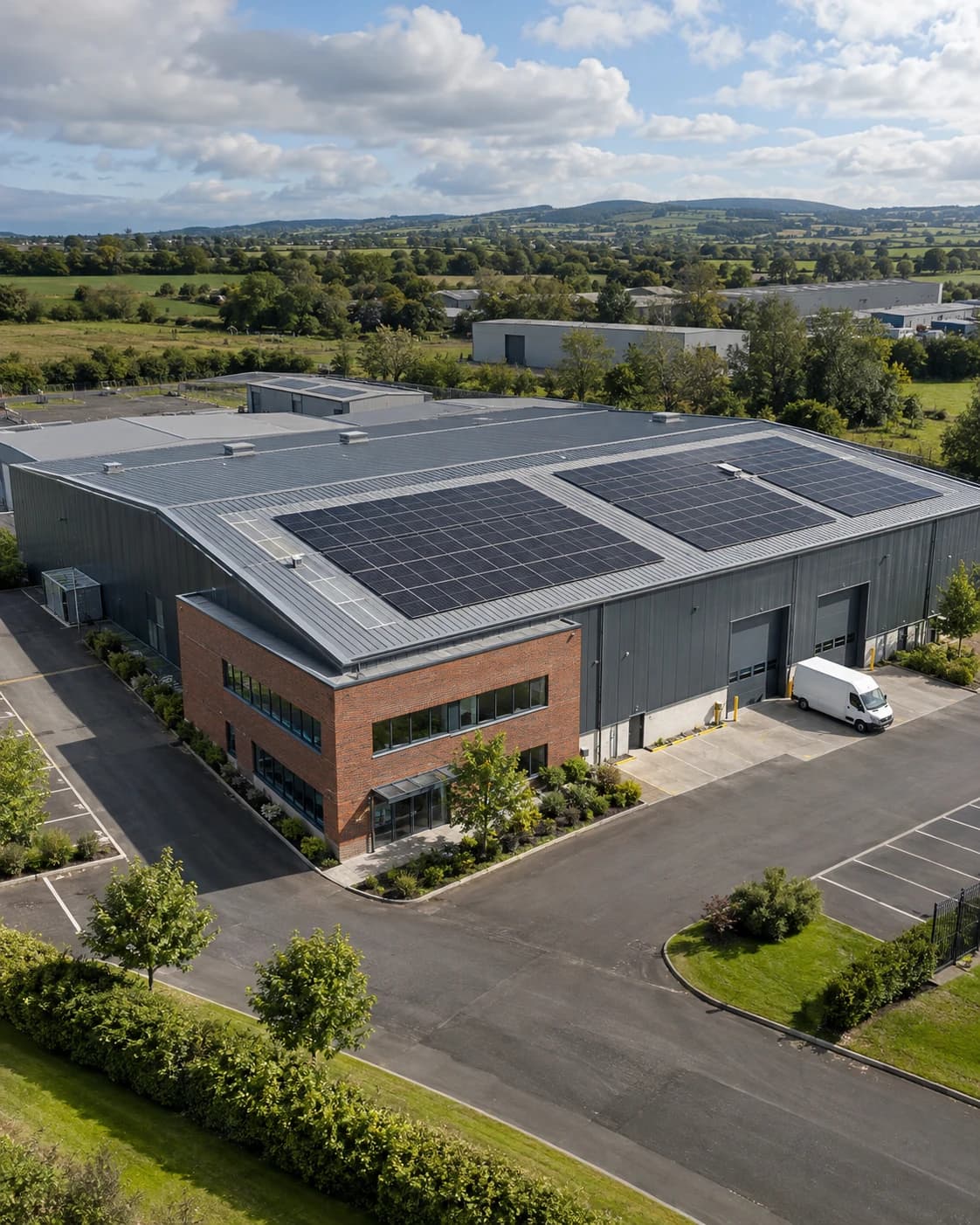
We establish the roof condition, structure, materials and safe access before proposing a layout. If you lease the premises, we identify the landlord and insurer permissions needed so the project has a sound starting point.
The electrical assessment establishes available supply capacity, existing generation, the connection route and export limits. Fennor explains how those findings affect system size, cost and the work required at your premises.
We plan around deliveries, production, staff and customers, with access and potential shutdown windows agreed before scheduling. You know the installation sequence and the people responsible for the work.
Fennor gives you an explained investment case: site-specific output, actual demand, itemised costs and transparent assumptions. We take you through warranties, monitoring and the support included before you decide.
New-application window: 6 October 2026–6 July 2027. Existing offers are not uplifted.
Current SEAI funding guidance ↗At 1,000 kWp, subject to the 45% eligible-invoice limit and scheme conditions. Not a standard grant for every business.
Exclude batteries and other ineligible extras. This figure is not stored or sent.
For a 50 kWp system, before the eligible-invoice limit.
Illustration only—not a quote, grant offer or eligibility check. Rates apply to the application window stated above; SEAI determines the award.
Check SEAI’s calculation and terms ↗Before you commit. Fennor guides the application sequence and identifies the required scheme-registered company and installer for your project. We explain what you need to submit and what the installation team supplies. The SEAI offer must be received before materials are purchased or work begins. Premises must be built and occupied by 31 December 2024; other eligibility conditions apply. Offers allow eight months for completion and required documentation—not the whole nine-month application window.
PV funding—not an extras allowance. Batteries and supplementary items are excluded from eligible NDMG costs. Do not assume other State funding can be combined for the same installation. Read the full terms ↗
A CLEAR PATH FROM INTEREST TO INSTALLATION
Tell us about the premises and working hours. Fennor reviews the demand data and coordinates the site and electrical assessment around your operation.
You receive an explained proposal covering the equipment, estimated generation, installed cost, exclusions and delivery roles—so the investment is clear before you commit.
Fennor sets out the grant and network sequence, permissions and installation plan, including the application actions that remain with you and the information supplied by the team.
The installation is tested and commissioned, and we explain the monitoring, relevant records and support contacts at handover. The agreed scope identifies any ongoing service included.
Want to see how this could apply to a site like yours? Share your premises and priorities, and we will point you to relevant available project examples. Projects & case studies ↗
04 / STRAIGHT ANSWERS
For business owners, facilities teams and the people making the investment decision.
Fennor starts with the electricity your business can use while the panels are generating. We review your operating hours and interval data alongside the roof, electrical infrastructure and tenure, then explain the system options that fit the site and the investment you are considering.
Explore operating patterns ↗Fennor presents a site-specific model rather than a universal savings percentage. We separate on-site electricity use from export, explain the tariffs and costs assumed, and show how a less favourable scenario changes the return so you can make an informed investment decision.
What a proposal should address ↗Not necessarily. We account for weekends, shutdowns, seasonal demand and connection constraints before recommending the array size. This helps avoid paying for extra generation with limited value to your business. Solar PV capacity in kWp is not the same as the inverter connection rating in kVA.
ESB Networks connection routes ↗Yes, where they fit the site. We compare their added cost and purpose against fleet charging times, electrical capacity and usable solar surplus. Storage is not automatically backup power; resilience needs compatible equipment and a separately designed arrangement.
Explore battery storage ↗Let us know that the premises are leased. Fennor identifies the permissions and practical access needed for the proposal; your landlord and legal adviser establish the agreement on roof maintenance, insurance and the end of the tenancy before you commit.
Discuss your premises ↗Fennor plans the installation around the constraints of your working site. Before a programme is agreed, we explain deliveries, work zones, staff and customer access, and any electrical shutdowns. Zero downtime cannot be assumed; the planned disruption is made clear in advance.
Plan around operations ↗No. The amount depends on system size, eligible invoiced cost and the scheme conditions. The explorer above demonstrates the two financial limits; it does not check eligibility or issue an offer. Use the current SEAI terms before relying on funding.
Read the current SEAI scheme ↗Yes—commercial enquiries elsewhere in Ireland can be considered individually. Fennor is based in Slane, with Meath, Louth and Dublin as the primary area. Share the location and scope first so practical delivery can be discussed.
Tell us about your site ↗LET’S UNDERSTAND YOUR SITE
Based in Slane. Commercial enquiries across Meath, Louth and Dublin, with projects elsewhere in Ireland considered individually.
089 403 2737 ↗info@fennor.ieStart with your premises and operating hours. Annual electricity use, interval data and roof photographs help if available; we explain what else is needed for the site assessment and investment proposal. No bills or files are uploaded here.