Your comfort comes first.
The heating and hot-water strategy must stay within its design requirements. Solar scheduling should never compromise hygiene or the comfort the system is designed to provide.

FENNOR / HEAT PUMPS WITH SOLAR
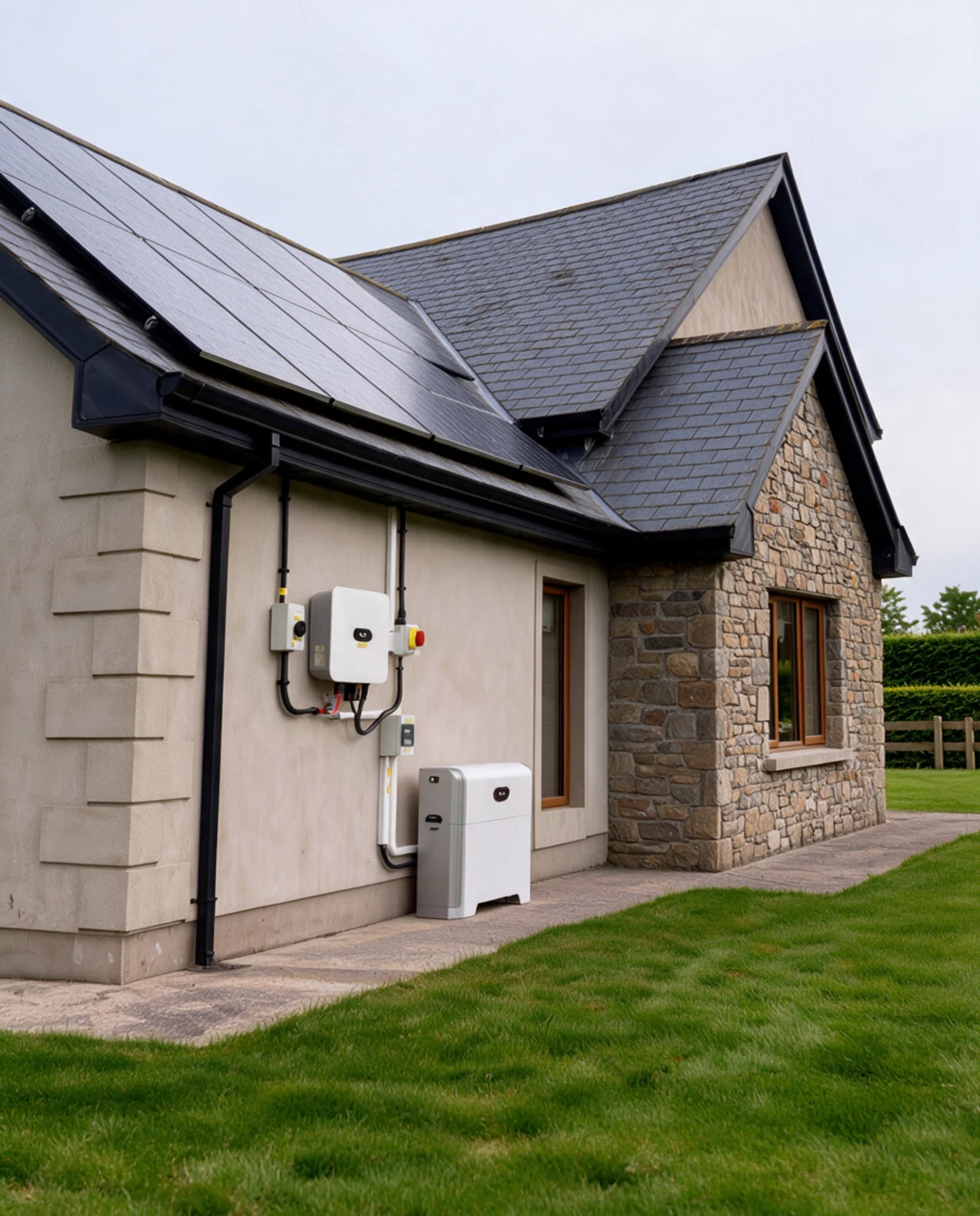
Solar and a heat pump work on different daily and seasonal patterns. Fennor helps you bring them into one energy plan, with clear priorities for heating, hot water and any battery.
YOUR SOLAR AND HEATING / PLANNED TOGETHER
Already have solar, or considering both upgrades? Fennor brings the generation estimate and heating assessment into one explanation of what they can realistically do together. Solar can supply some heat-pump electricity when demand coincides, but peak solar months are not peak heating months.
Talk through solar and heating togetherWINTER / YOUR ENERGY PLAN
Fennor makes the seasonal gap clear in the energy explanation. Shorter daylight and greater heat demand limit the overlap, so the heating design and electricity connection must work without assuming solar covers winter heating.
We bring the solar-yield estimate and heating assessment into one explanation, showing useful overlap, control priorities and where the assumptions stop.
ONE SURPLUS UNIT / ONE DESTINATION
Fennor turns your hot-water, car-charging and evening-energy priorities into a proposed control order. A battery, car and cylinder can compete for the same available surplus; you see the trade-offs rather than three promises using the same energy.
The heating and hot-water strategy must stay within its design requirements. Solar scheduling should never compromise hygiene or the comfort the system is designed to provide.
Using surplus means forgoing an export payment. We explain that trade-off against the electricity or other heating cost genuinely displaced, with the tariff assumptions visible in the proposal.
We show which demand takes priority and how the proposed controls support it. Compatible batteries, heat pumps, diverters and EV hardware do not by themselves establish a coordinated control strategy.
YOUR PROJECT WITH FENNOR
We explain the choices, the work involved and what happens next, so you can decide with a clearer picture.
We look at heating demand alongside the expected solar generation, including winter when heat demand is higher and daylight is lower. The heating design must work without relying on summer surplus being available all year.
We work through your hot-water routine and the opportunities to align it with generation. The controls must retain comfort, manufacturer requirements and hygiene settings. An immersion diverter is not automatically more efficient than the heat pump for heating water.
We explain how much surplus may remain, which loads you want to shift and how the tariff affects value. Battery capacity, power limits and losses are included in that comparison. A domestic battery shifts energy through the day, not from summer into winter.
A SIMPLE START
MORE WAYS WE CAN HELP
SUPPORT FOR THE WORK YOU HAVE IN MIND
These are the relevant funding options to discuss with Fennor alongside your project. We explain the full price, the support that may apply and the steps before you commit.
Reviewed · Guidance, not an eligibility decision.
Grant support
Up to €14,500
The eligible house maximum includes the system, necessary heating upgrades and qualifying scrappage. It is not a flat payment for every installation.
Grant support
Up to €1,800
Support is based on the installed panel capacity. With a separately eligible €600 battery grant, the combined standard maximum is €2,400.
Grant support
€600
Flat-rate support for an eligible battery of at least 5 kWh. A larger battery does not increase this grant.
Grant support
Up to €9,000
An eligibility-based route: up to €8,400 solar PV plus €600 for an eligible battery. It replaces—not adds to—the standard PV rate.
USEFUL ANSWERS
Plain language. No pressure to have it all figured out.
Do not assume it will. Winter heating need is generally highest when solar availability is lower. We explain the seasonal balance and the grid electricity your plan still needs to allow for.
Yes. We work through the equipment, your hot-water routine and electricity tariff together. The controls need clear priorities, with comfort, export value and efficiency considered and the same solar surplus never counted twice.
LET’S TAKE THE NEXT STEP
Cold rooms, rising bills or a heating system you want to change? Tell us what matters most. We explain the assessment and options for your home—you do not need to choose the equipment or a grant scheme first.
Based in Slane, serving Meath, Louth and Dublin. Tell us about a project further afield and we will confirm whether we can help.
089 403 2737 ↗info@fennor.ieWe will confirm the next step, availability and any assessment cost with you before a visit is booked.