
SOLAR, CONNECTED TO YOUR EVERYDAY
Small additions.
A more
connected home.
Hot water for the evening. Charge for the next journey. A clearer plan for the unexpected. Choose the additions that make sense for you.
Explore your options ↓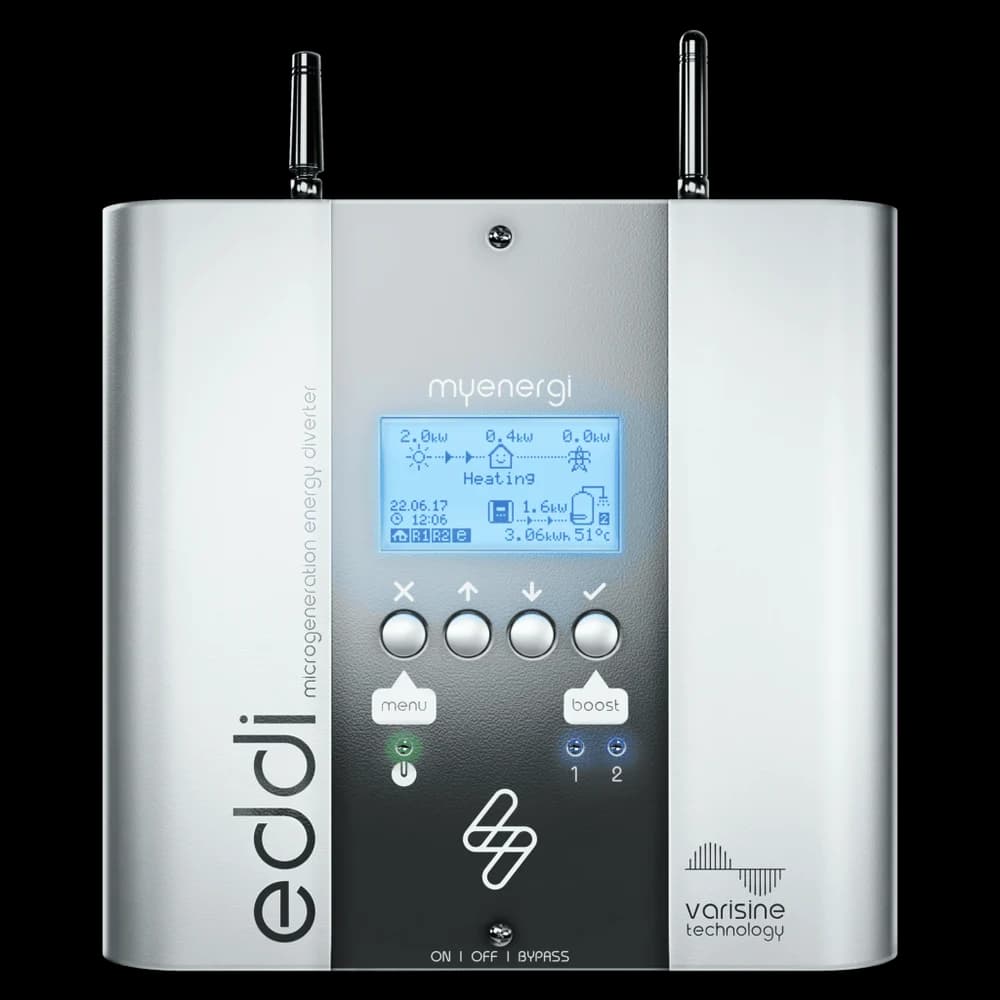
into useful hot water.
The right additions.
Not every addition.
Fennor starts with the improvement you want, then reviews your existing equipment. You get a clear recommendation, compatibility explanation and installed price—not a list of extras to figure out yourself.
01 / MYENERGI EDDI
as warmth.HOT-WATER DIVERSION
A DIFFERENT KIND OF ENERGY STORAGE
EDDI.
Put surplus to use.
Your cylinder can become a useful place for spare solar electricity.
EDDI measures power flowing to and from the grid. When generation exceeds household demand, it can divert surplus to a compatible immersion heater, varying output as the surplus changes. Standard eddi supports a heating load up to 3.7 kW.
It starts with your cylinder.
We check the immersion, controls, hot-water demand and existing heat source. No suitable cylinder? This hot-water setup is not the right answer. It does not directly power an instantaneous electric shower.
“Surplus” doesn’t mean “worth nothing”.
We compare the heating cost you could avoid with the export income you would give up. If a heat pump already heats your water efficiently, diversion is not automatically the better-value choice.
Read myenergi’s EDDI explanation ↗The complete EDDI guide ↗02 / SOLAR-AWARE EV CHARGING
Your next journey.
Starts at home.
A charger that can respond to spare solar—not just the clock.
myenergi zappi can charge using grid electricity, available solar, or a combination. If the car is at home during the day, solar-aware charging can turn some of your generation into driving energy.
Prioritises charging speed, using grid electricity alongside available generation.
Varies the charging rate with available surplus and can top up from the grid.
Can pause when surplus is insufficient, depending on the selected settings.
We help you choose a convenient charging position and cable reach. A Registered Electrical Contractor assesses the supply, protection and installation requirements, which feed into your charger recommendation and installed price. The charger rating is not a promise of your car’s charging speed.
Explore home EV charging ↗myenergi zappi product details ↗SEAI support is subject to eligibility. Choose a registered smart charger, use a Safe Electric Registered Electrical Contractor and wait for the offer before work starts. Complete installation and the claim within six months.
Check the full SEAI charger grant terms ↗Explore all grants & funding ↗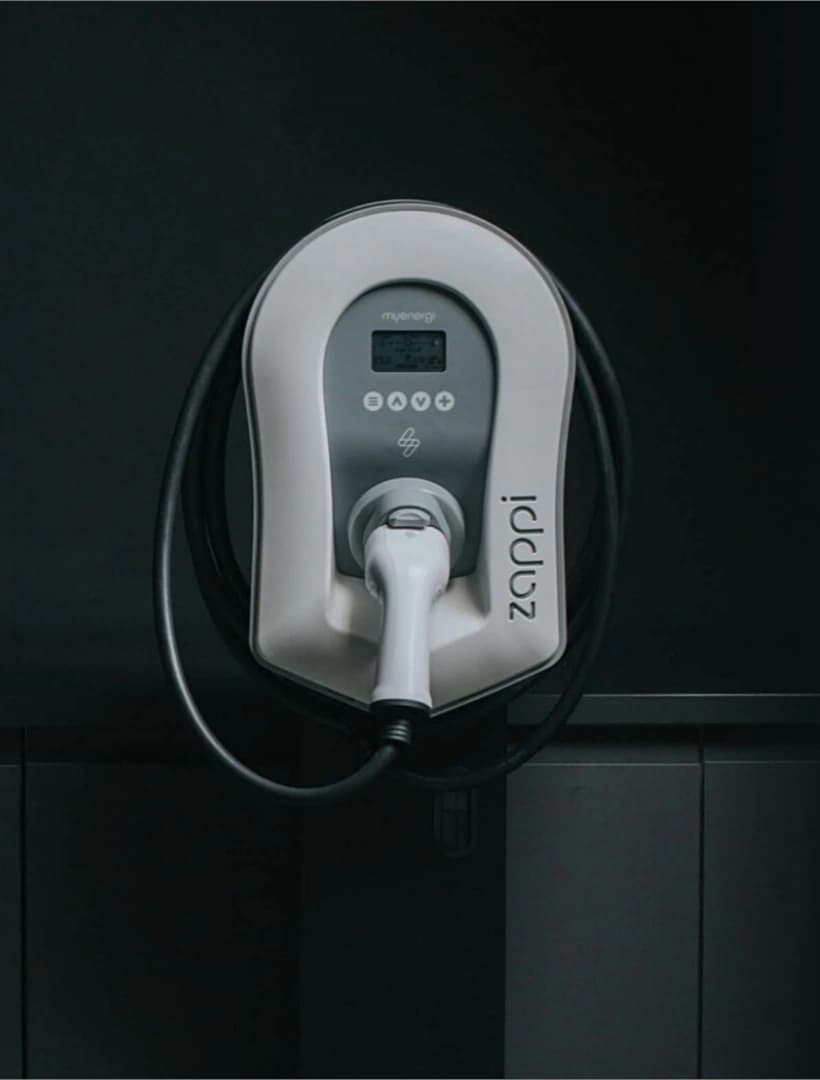
03 / PLAN FOR THE UNEXPECTED
A small switch.
A bigger conversation.
A changeover switch is a component of a backup system. It is not, by itself, backup power.
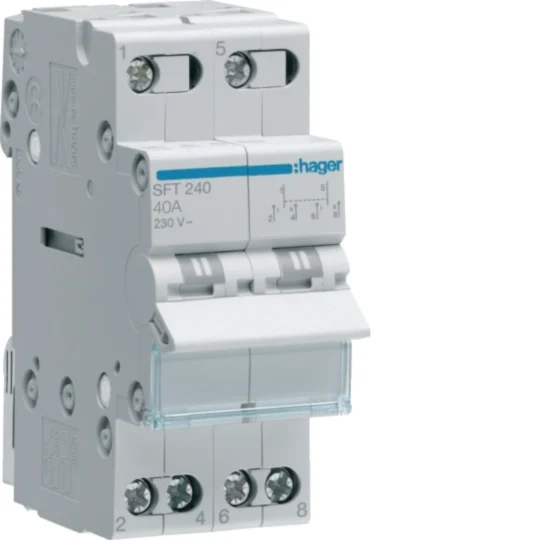
Shown to explain the component, not a specification for your home.Hager Ireland product catalogue ↗
Decide what needs to stay on.
Ordinary grid-connected solar disconnects in a power cut. Supplying selected circuits safely requires compatible backup equipment and isolation from the grid.
Fennor turns your outage priorities into a brief for the Registered Electrical Contractor. We explain the resulting proposal, including supported circuits, power limits and transfer behaviour, before you decide. Whole-home and uninterrupted power are not default promises.
Electrical design, protection, earthing and certification belong with a Registered Electrical Contractor. This is customer guidance, not a wiring or DIY installation guide.
SEAI: solar during a power cut ↗Backup & changeover guide ↗04 / THE QUIETER PART OF A GOOD SYSTEM
Good decisions.
Start with good data.
Current-transformer sensors help compatible equipment see electricity flow. harvi can send those measurements wirelessly where a direct sensor cable is impractical. It harvests energy from the sensor and needs no battery of its own.
It is optional—not a required extra on every job. We establish whether a direct sensor cable or a suitable wireless arrangement makes sense for your home, including radio coverage and sensor placement.
How myenergi harvi works ↗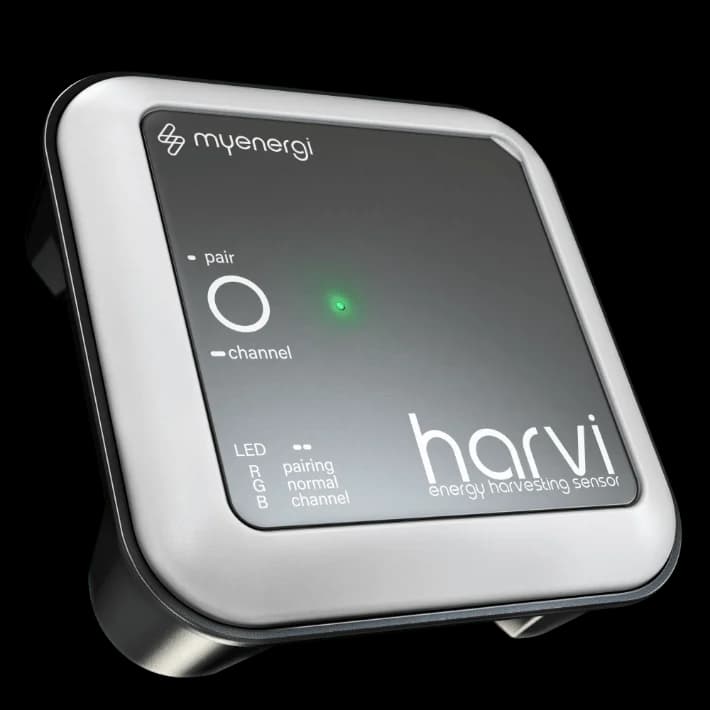
At handover, we walk you through…
- Your own monitoring access.
- A clear explanation of priorities and schedules.
- What to do if readings look wrong.
- Model details, documentation and a support contact.
Monitoring makes performance visible. It does not guarantee a saving by itself.
05 / MAKE THE SYSTEM WORK AS ONE
Your energy.
In the right order.
Hot water, a battery and an EV can all want the same spare electricity. The important part is deciding who gets it, and when.
ONE SURPLUS. DIFFERENT PRIORITIES.
Where would you
use it first?
Illustrative allocation, not a live controller or a promise of product interoperability. Fennor assesses compatibility and explains how your chosen priority would work. The installation team configures the agreed controls and demonstrates them at handover.
Heat for later. Electricity, too.
In this example the immersion takes 2 kW, with 1 kW available for the battery. When the water reaches its target, priorities need to move on. Actual allocation depends on the connected controls.
The allocation totals 3 kW in every example. No energy is counted twice. Export remains another option; these examples assume the full surplus can be accepted.
Already have a battery?
We identify your battery model and establish how the controls will work together. The installation team configures the agreed priorities to prevent a diverter or EV charger unintentionally draining stored electricity. Integration depends on the system—not simply whether two products have an app.
myenergi: coordinating hybrid batteries ↗ANSWERS WORTH HAVING
Good questions.
Clearer choices.
The questions we help you work through before choosing a system for your property.
01What does an EDDI solar diverter do?
+
EDDI detects surplus solar electricity and varies the power sent to a compatible heating load, such as a cylinder immersion. It stores energy as heat in your water, not as electricity for the rest of the home.
02Do I need a hot-water cylinder for EDDI?
+
For the hot-water arrangement described here, you need a suitable cylinder and compatible immersion heater. An instantaneous electric shower is not a substitute. The installation assessment establishes whether your cylinder controls, heater ratings and safety devices are suitable before we recommend this setup.
03Should I choose a battery or a hot-water diverter?
+
They solve different problems. A battery keeps electricity for later; a diverter heats water. Fennor compares your hot-water demand, evening electricity use, export payment and existing heating cost, then explains the useful options and their installed prices. Both can be appropriate, but the same surplus unit cannot benefit both at once.
04Can EDDI work with a heat pump or an existing battery?
+
Potentially, but coordination matters. A heat pump may already provide hot water efficiently, while a poorly configured diverter or EV charger can draw from a battery unexpectedly. Fennor reviews your equipment and existing hot-water costs, then explains compatible options. The installation team configures the agreed control priorities and demonstrates them at handover.
05Will a changeover switch keep my house running in a power cut?
+
Not on its own. It is part of a designed backup arrangement requiring a suitable inverter output, safe grid isolation, protection and supported circuits. Available battery charge and output limits determine what can run and for how long. A Registered Electrical Contractor must design and certify the work.
06Is automatic backup the same as uninterrupted power?
+
No. A transfer can involve a short interruption, and performance depends on the specific system. Fennor explains the supported circuits and switching behaviour in the proposed system before you decide. Critical or medical equipment needs a separately agreed continuity plan.
07Can zappi charge my car without solar panels?
+
Yes. It can use grid electricity as well as available solar. Solar-aware charging is most useful when the vehicle is plugged in during generation. Charging modes, schedules and the vehicle’s own limits determine how it behaves.
08Is there a grant for an EV home charger?
+
SEAI currently offers up to €300 for an eligible home charger installation. Use an eligible model on the Smart Charger Register and a Safe Electric Registered Electrical Contractor. Wait for the offer before starting and meet the six-month completion and claim deadline. Other property and scheme conditions apply.
09Do I need harvi as well as an EDDI or zappi?
+
Not always. harvi is an optional wireless link for compatible current-transformer sensors where a wired connection is impractical. The installer checks the measurement points, radio conditions and product-specific requirements. It is not a battery or a standalone energy-saving device.
10Can accessories be added to existing solar?
+
Often they can, after a survey. We identify the inverter, battery, supply and monitoring setup, then explain compatible additions and their full installed cost. That includes any wiring, protection, controls and commissioning—not just the accessory price.
LET’S KEEP IT USEFUL
What would make
your home work better?
Tell us what you want to improve and what equipment you already have. We’ll establish compatibility, explain the useful options and set out the installed cost and any grant steps before you commit.
Based in Slane, serving Meath, Louth and Dublin.
089 403 2737info@fennor.ie ↗Product information and SEAI guidance checked 9 October 2026. Exact equipment, compatibility, availability and grant eligibility are confirmed for each proposal. Manufacturer images identify products; they are not photographs of Fennor installations or claims of endorsement.